eProcureAI / Solutions
SolutionsProcurement Solutions by Use Case
Approvals sitting a week, invoices keyed by hand, or nobody knowing what is already committed. Pick the one that sounds like your Monday.
Same product throughout. What differs is the configuration and which problem is worth solving first.
Different symptoms, usually the same two causes
A hospital and a manufacturer will both tell you approvals are slow. Underneath, they are describing completely different days.
One is trying to get supplies to a ward without abandoning the evidence trail. The other is trying to stop four plants ordering the same pallet in the same week. Both are real, and neither is solved by the other one's answer.
What they share is the cause. Almost every procurement complaint we hear traces back to one of two things. Either the information arrived too late to act on, or the compliant path was slower than the alternative.
Late information
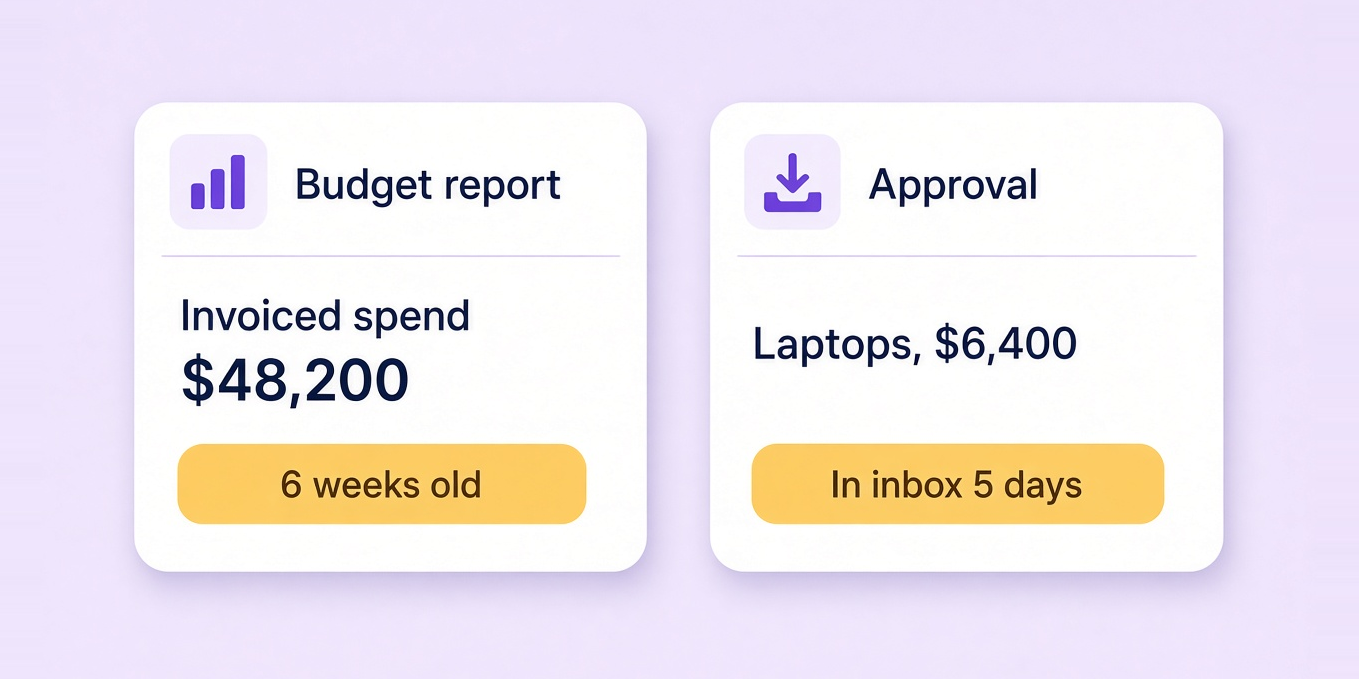
A budget report showing invoiced spend describes decisions made weeks ago. A supplier certificate that expired in March is discovered in June. An approval sitting in an inbox is invisible until somebody asks. In each case the facts existed, they simply were not in front of the person who needed them while it still mattered.
A slow compliant path
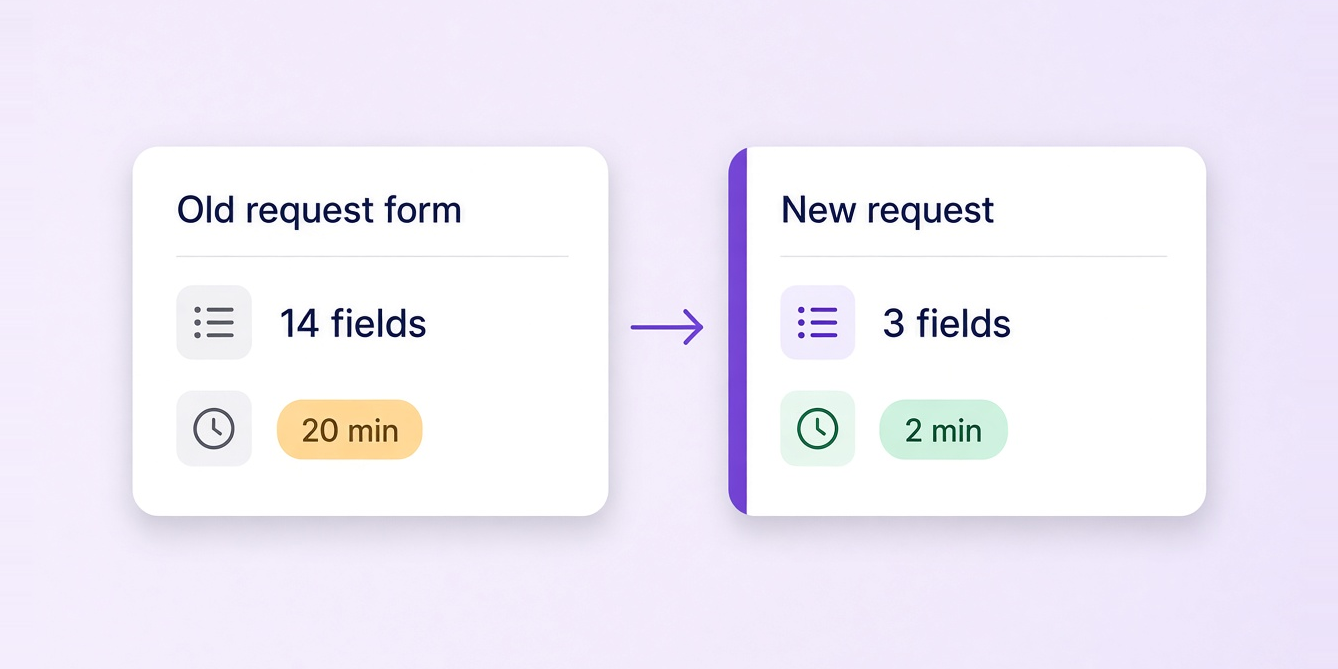
When raising a proper request takes twenty minutes and asking a colleague takes two, people ask the colleague. That is not a discipline problem, it is arithmetic. Every control you designed then sits on top of a record that is missing the interesting half of what happened.
The pages below start from a symptom. The fix is the same: a request complete enough to route, and committed money on the budget when someone says yes — not when AP keys a bill.
The problem you are solving
Six situations that account for most of the conversations we have. Each page says what changes and which modules do the work.
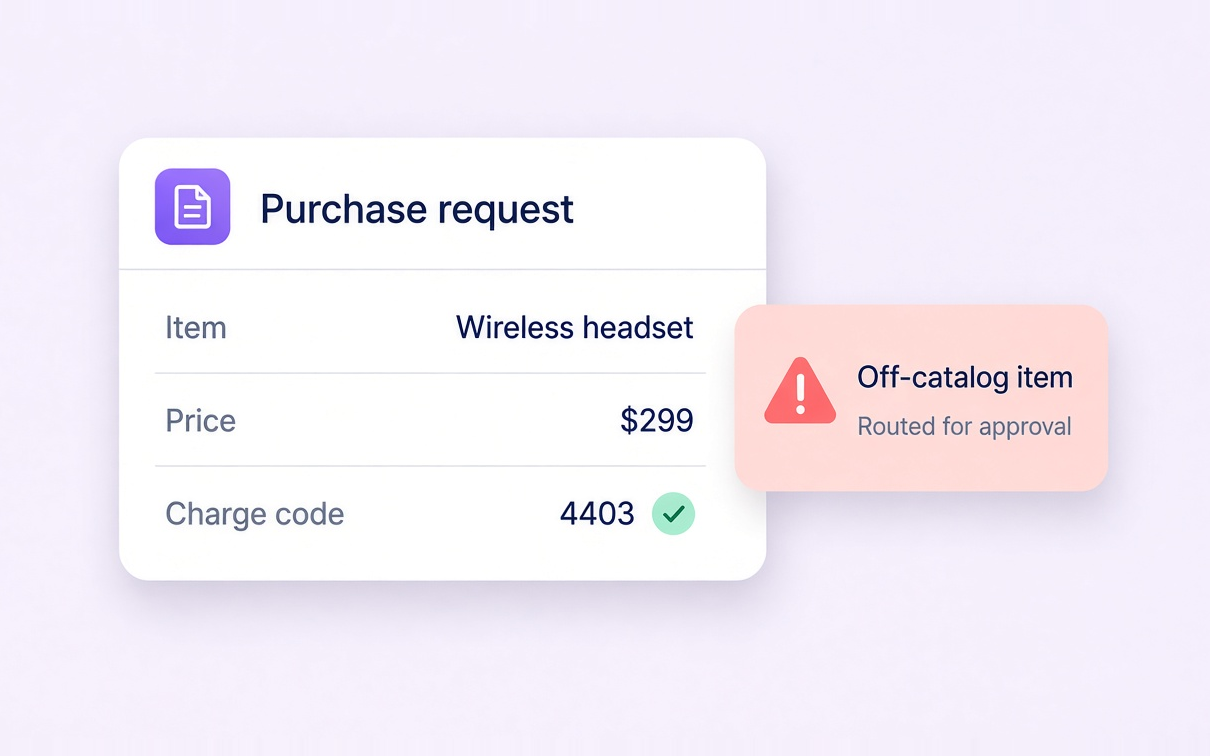
Control maverick spend
Off-catalog buying still goes through intake. Catalog prices sit on the request. Leakage shows up by category in spend.
Read the page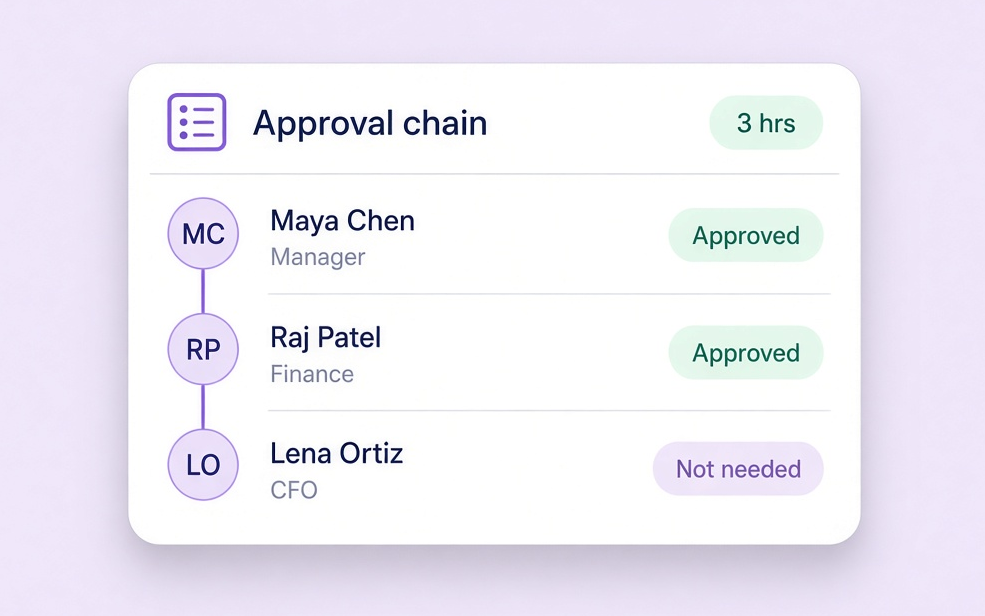
Speed up approvals
Rules pick who signs. Charge code is checked first. Budget moves when they approve.
Read the page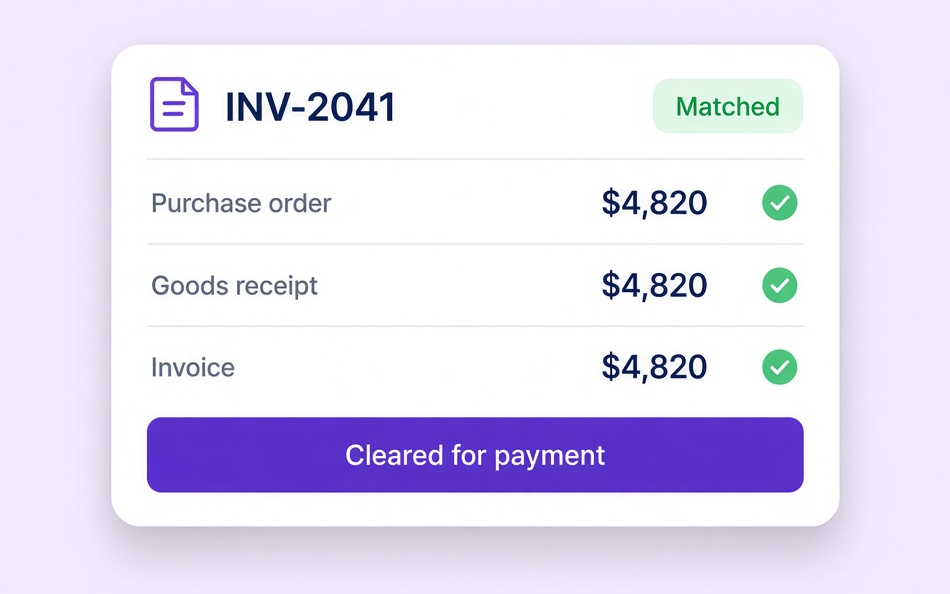
Automate invoice processing
Invoices are read and matched against the order and the goods receipt. Clean ones clear. Exceptions arrive with the evidence.
Read the page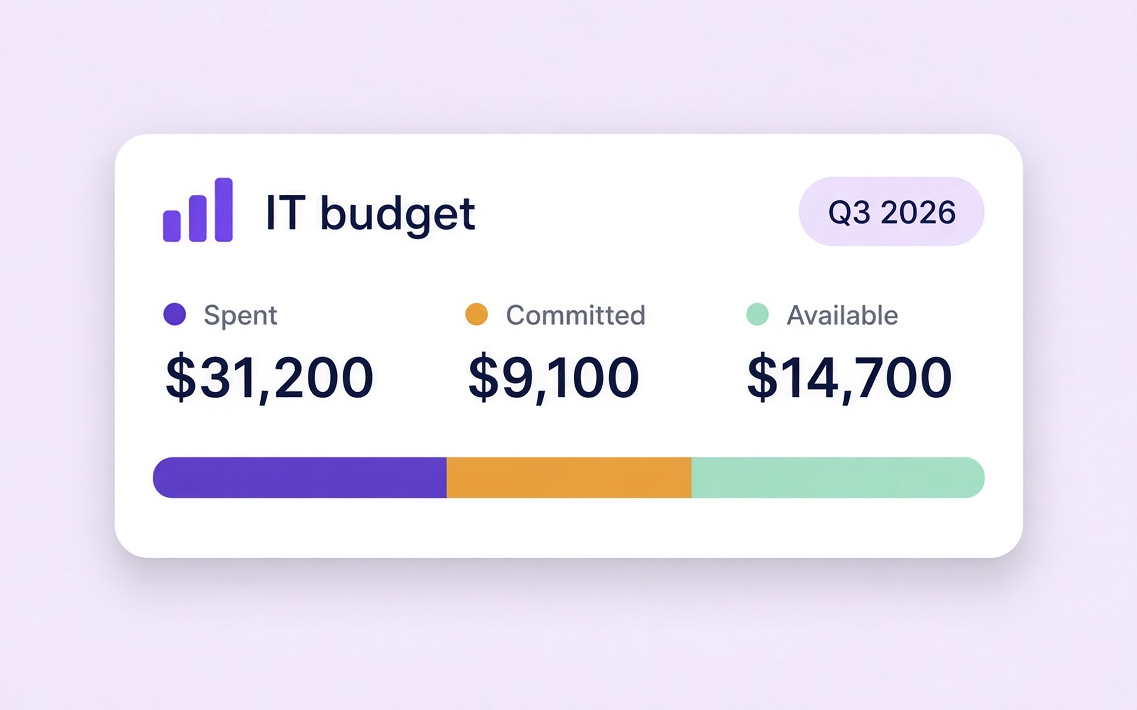
See committed spend
Budget moves when the request is approved, before the PO. Owners see committed versus available, not last month's invoices.
Read the page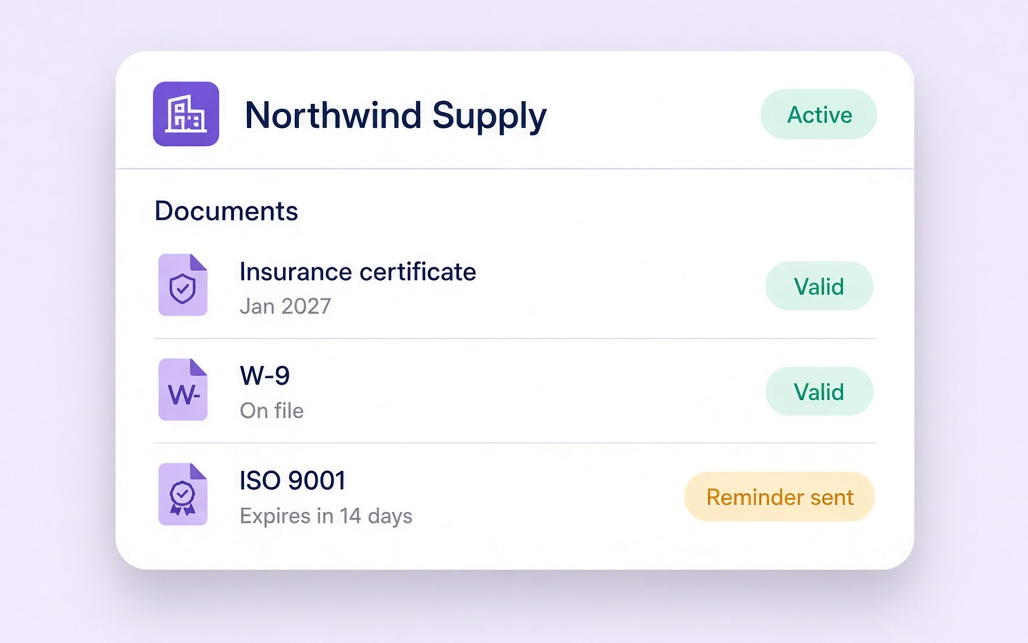
Keep supplier records current
Suppliers complete their own onboarding and expiry dates get chased, if you use VendorHub. You can buy without it.
Read the page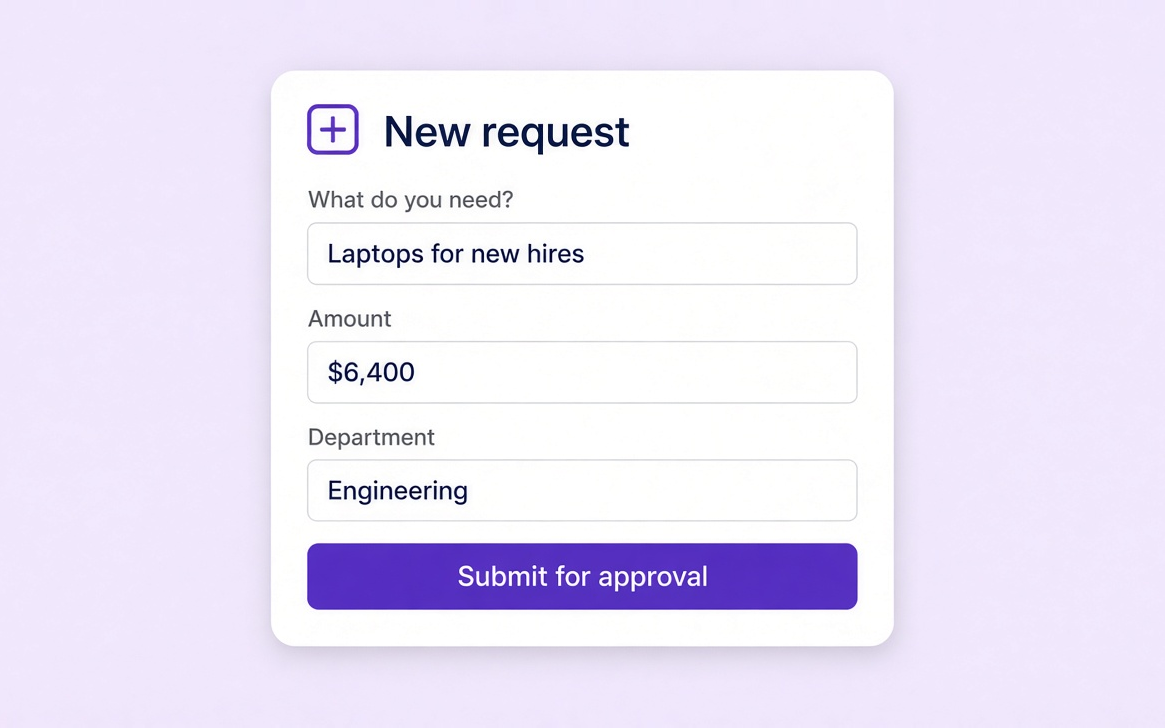
Replace spreadsheets and email
The most common starting point. One process instead of a shared tracker and an approval thread nobody can find.
Read the pageHow your sector actually buys
Same platform, different pressure points and which module is worth switching on first. Not a different product.
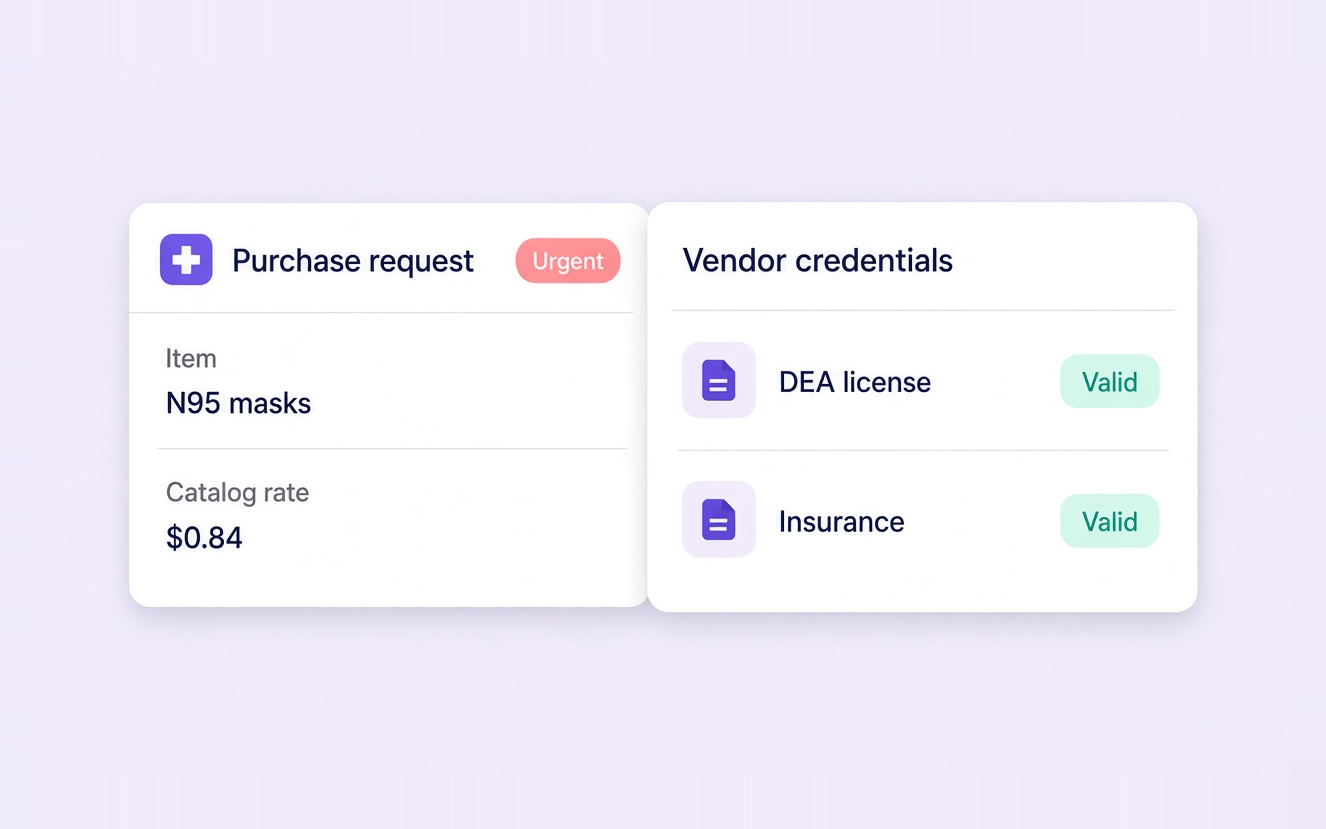
Healthcare
Urgency without losing the trail. Catalog rates on the request. Supplier credentials via VendorHub if you use it.
Read the page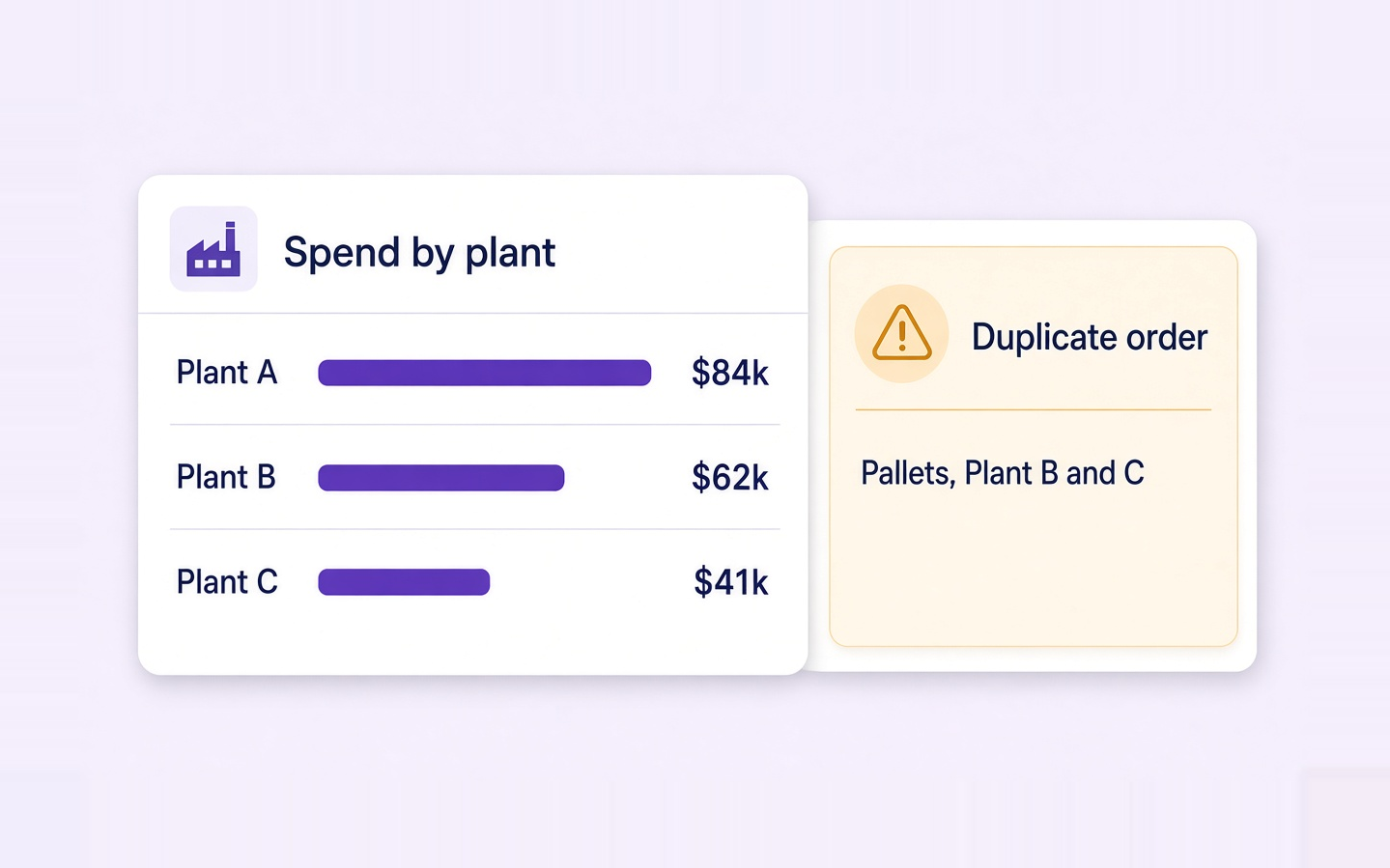
Manufacturing
Several plants on the same approval rules and charge codes. Duplicate suppliers and off-catalog buying show in spend.
Read the page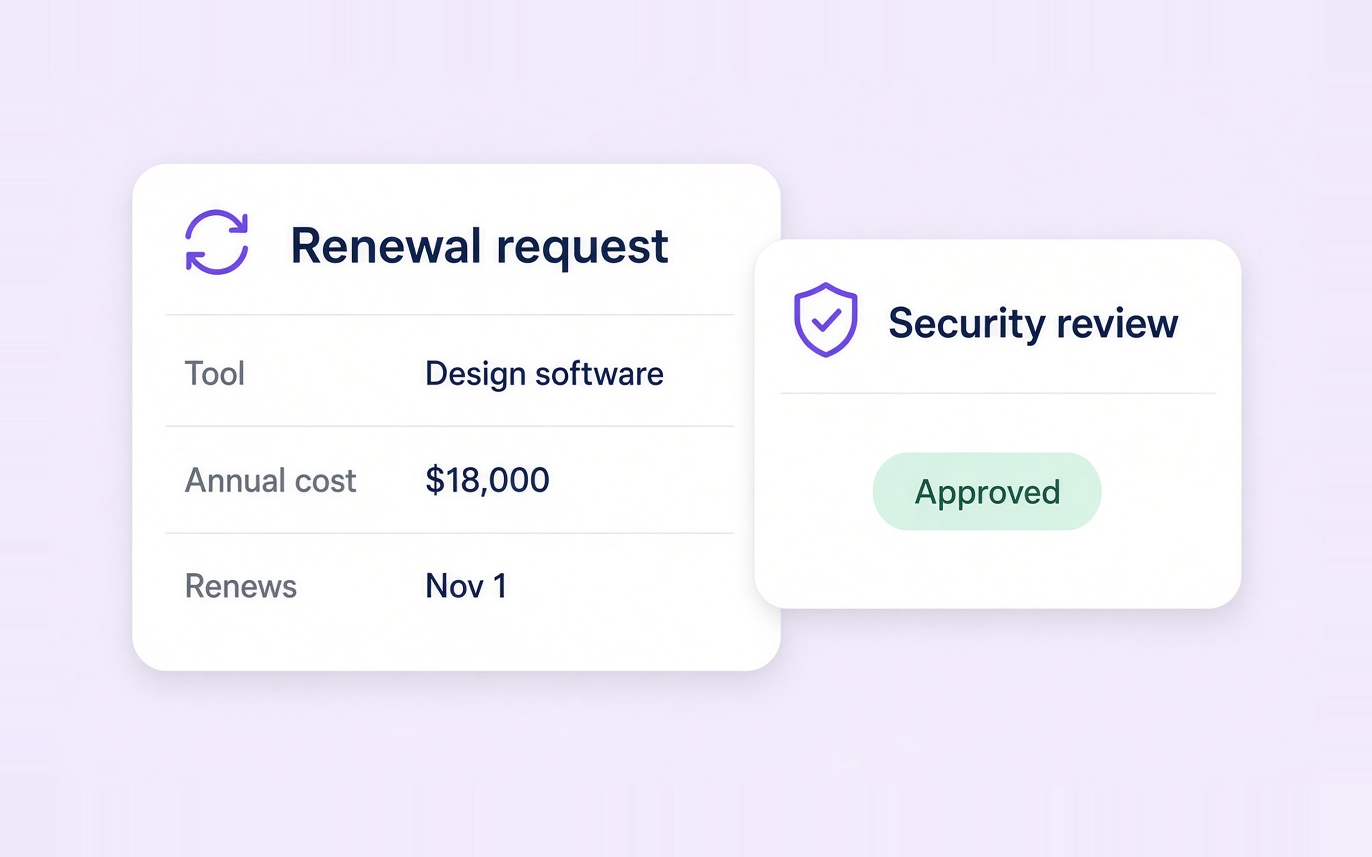
Technology and software
Renewals as requests, with sourcing before a big one if you need quotes. Budget commits at approval. Security review can sit on the request.
Read the page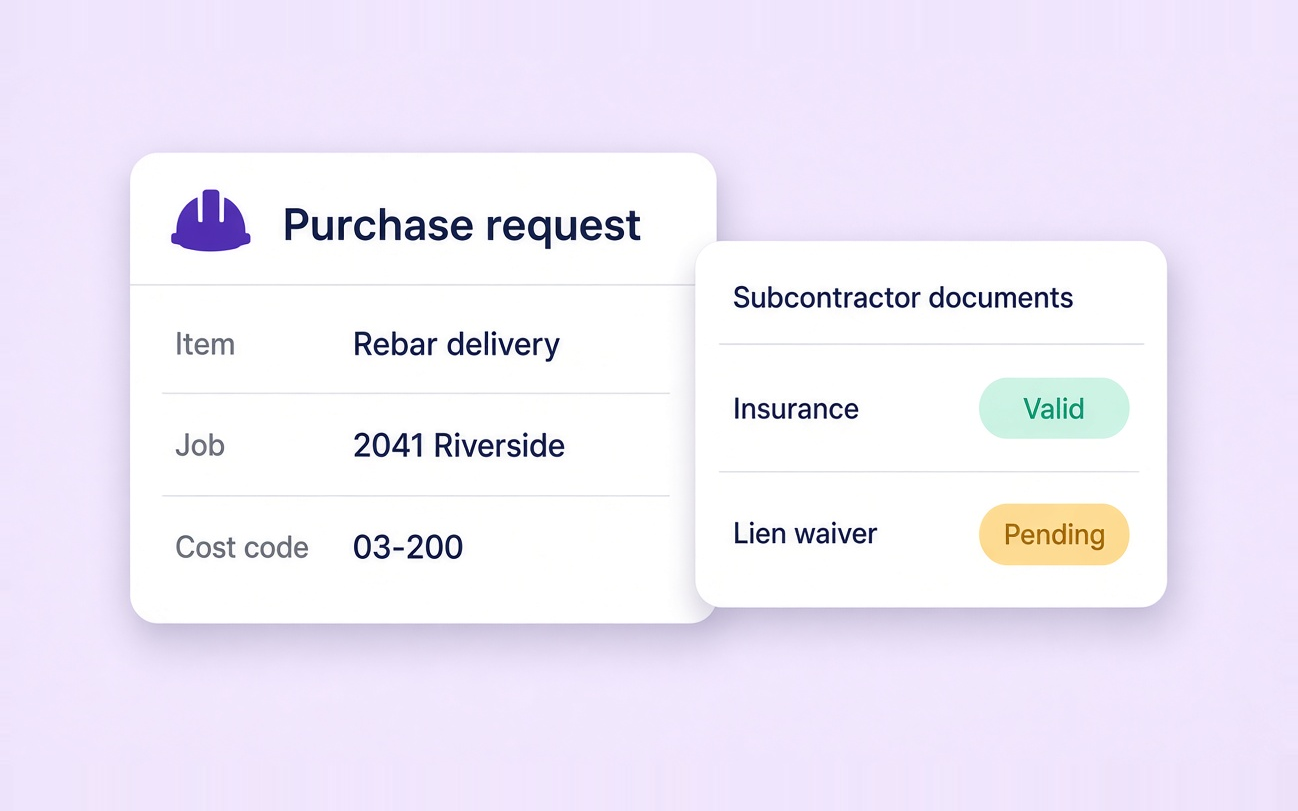
Construction and facilities
Job and cost code captured on the request. Subcontractor documents via VendorHub if you use it.
Read the page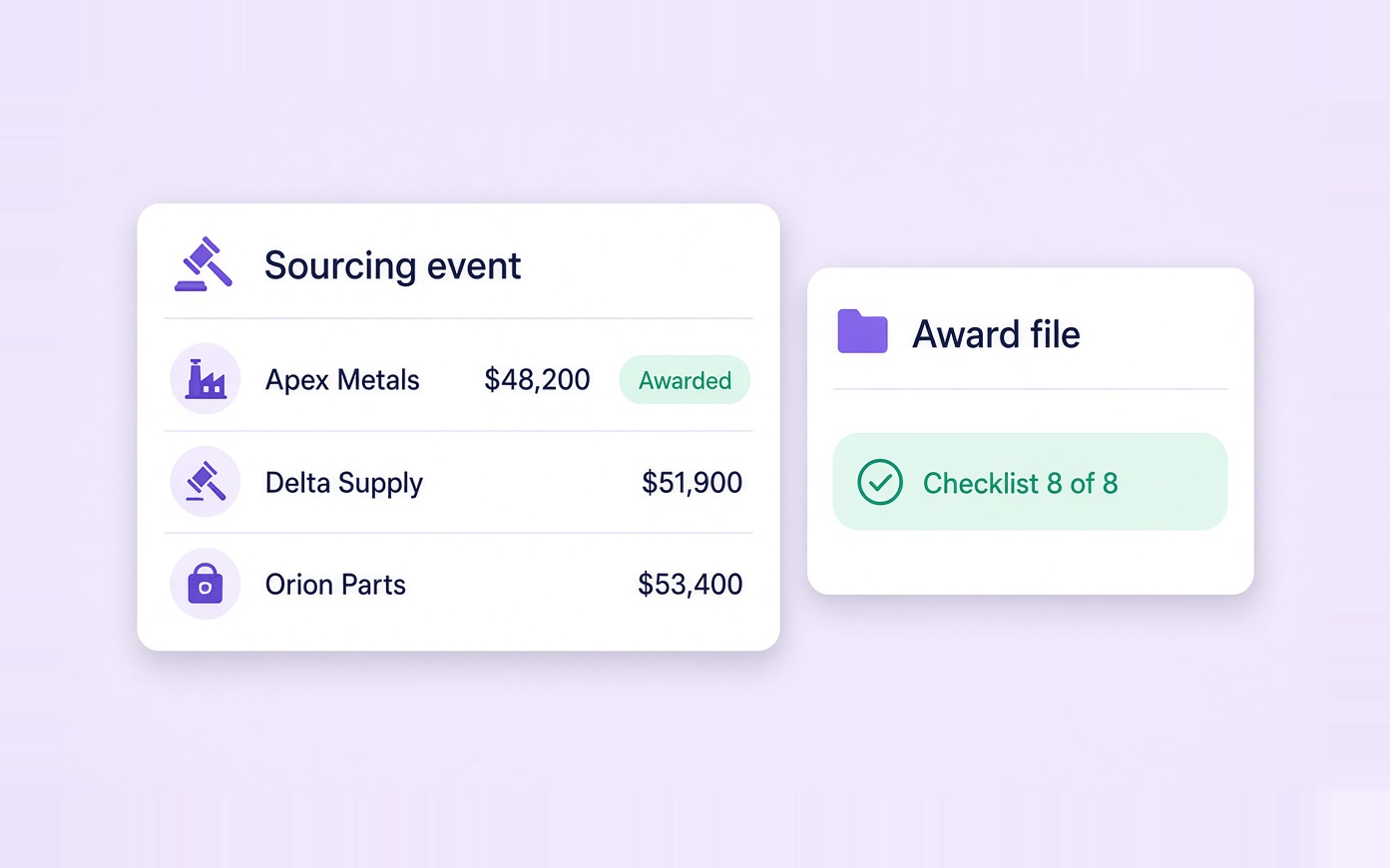
Government contractors
Competition documented in a sourcing event, sole source justified on the request. Award files and checklists are ProcureAudit, which is optional.
Read the page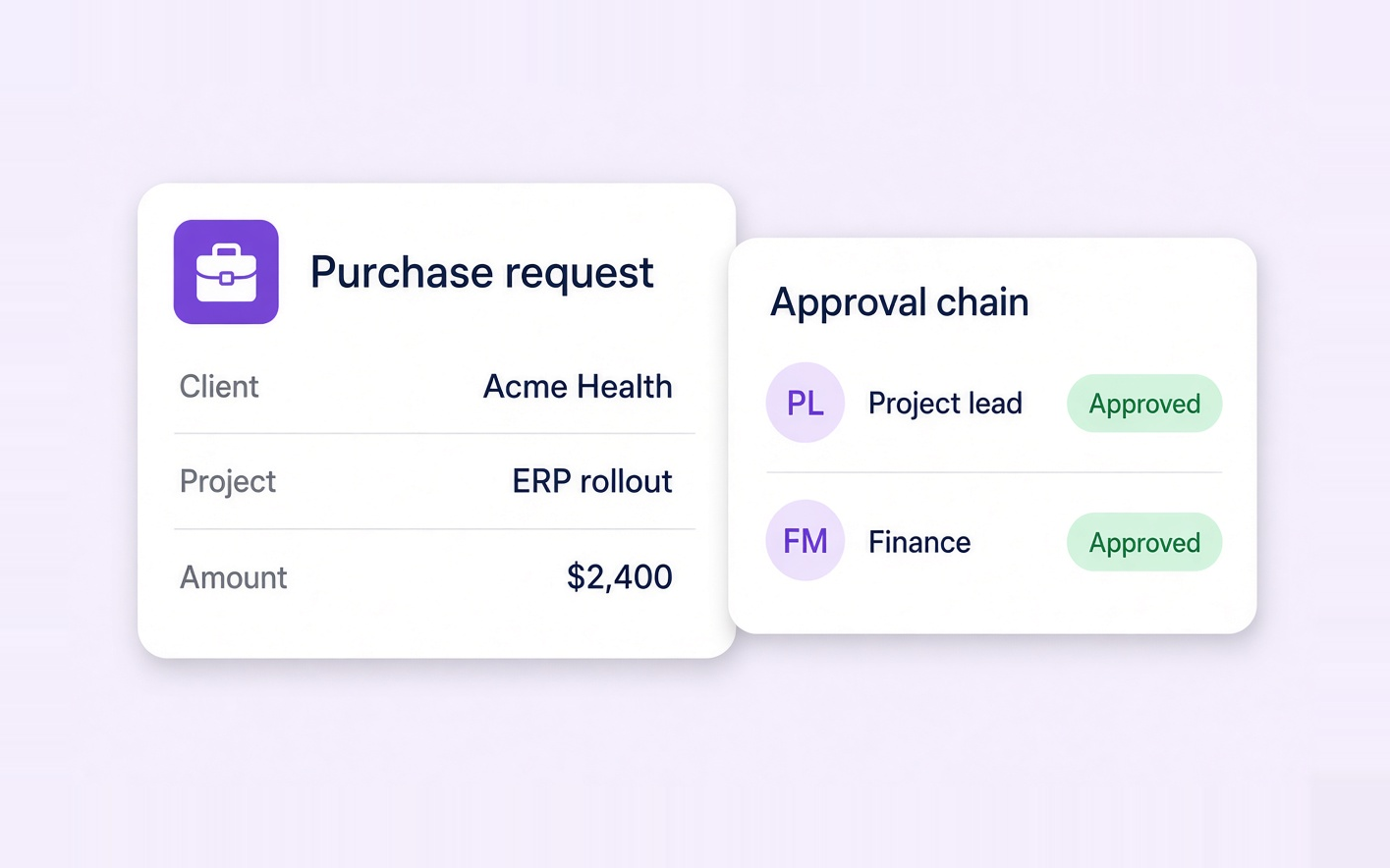
Professional services
Client and project captured on the request as charge codes. Subcontractor spend goes through the same approval chain. Your ERP still rebills.
Read the pageWhat lands on your desk
Written for the person rather than the organisation, because what matters to a controller is not what matters to a plant supervisor.
For CFOs
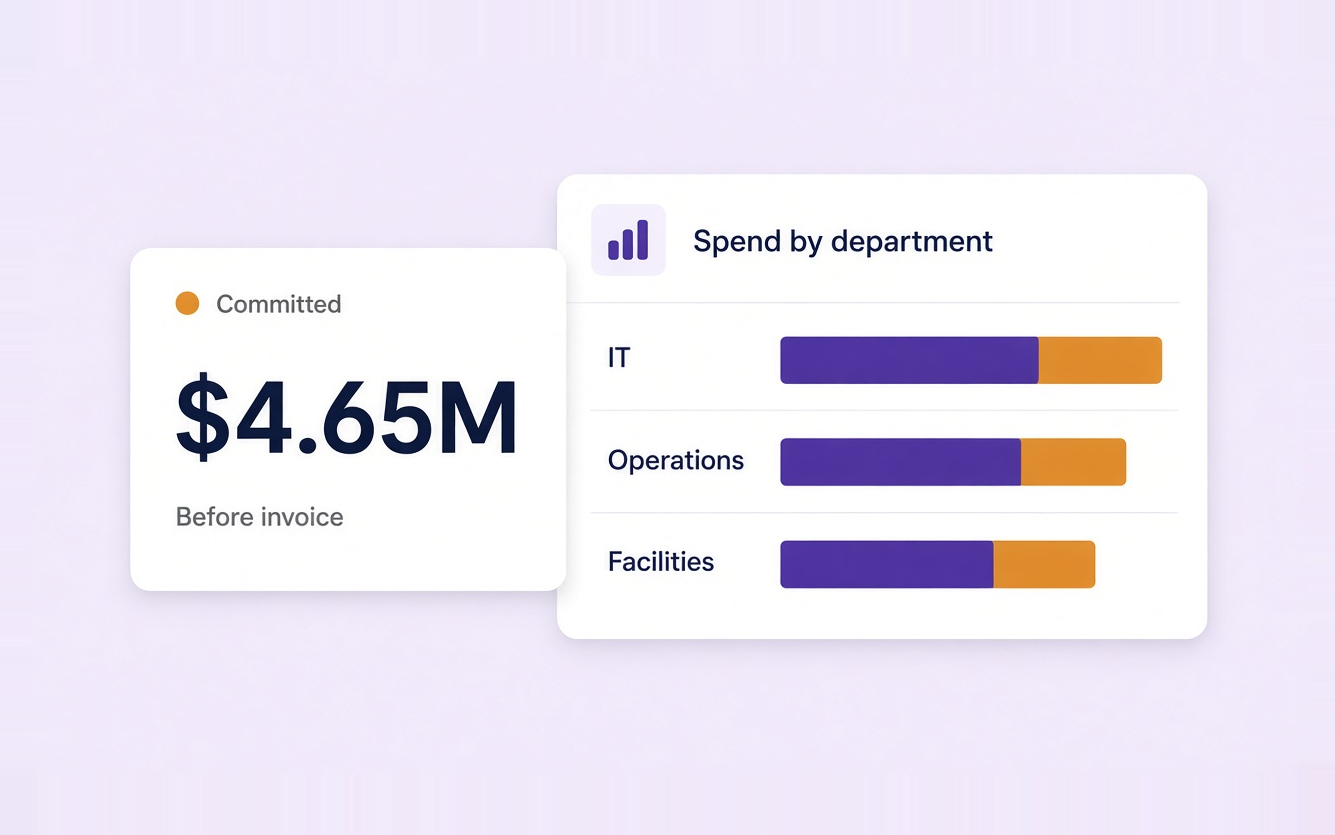
Committed spend visible when a request is approved, before the invoice. Your ERP still closes the books.
Read the page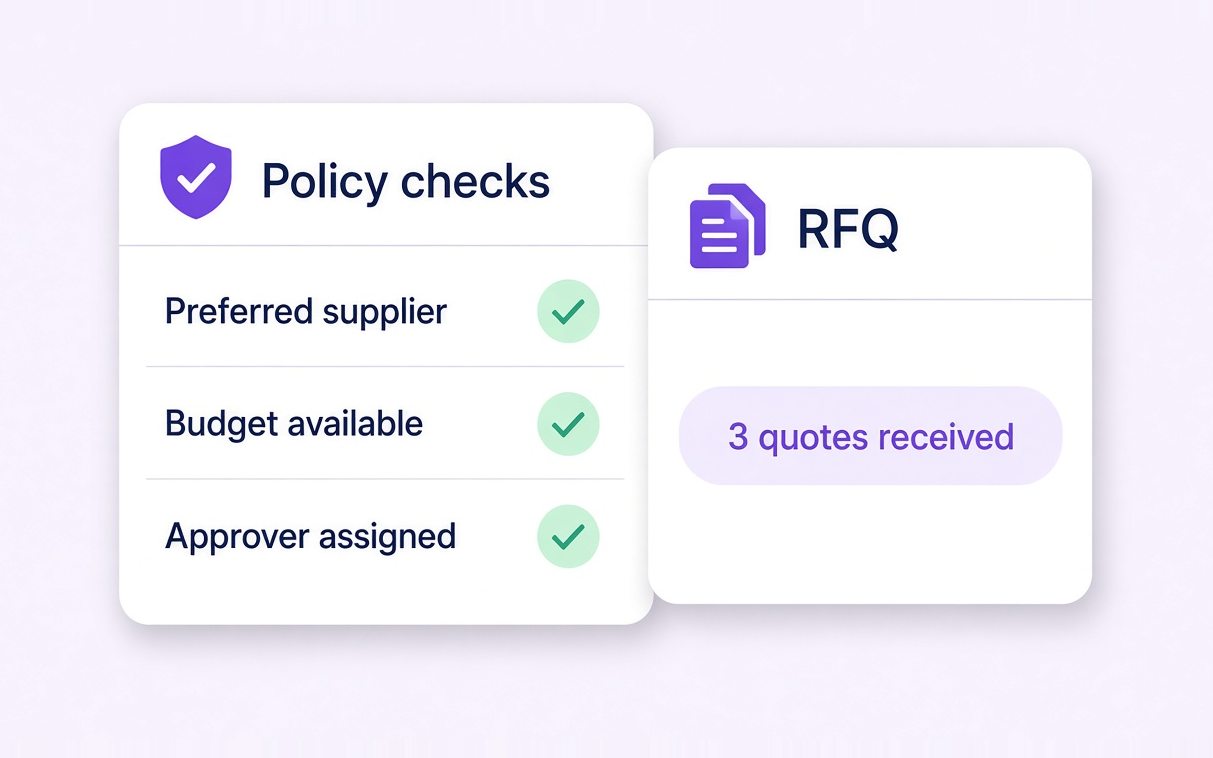
For procurement managers
Rules enforce policy on every request. Run an RFQ or RFP when you need quotes. T&Cs stay a human decision.
Read the page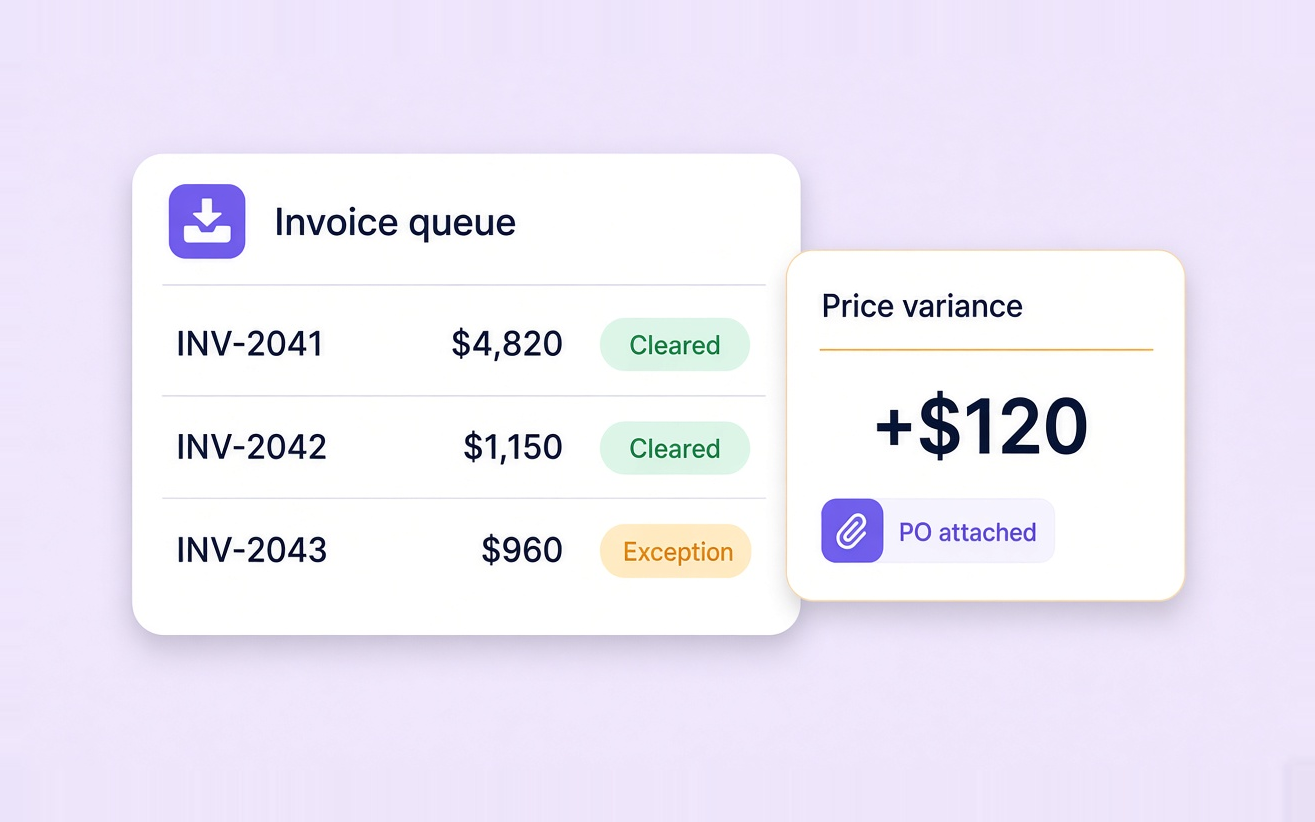
For AP teams
Clean invoices clear against the order and receipt. Exceptions arrive with the evidence. Month end in your ERP uses numbers that were already right.
Read the page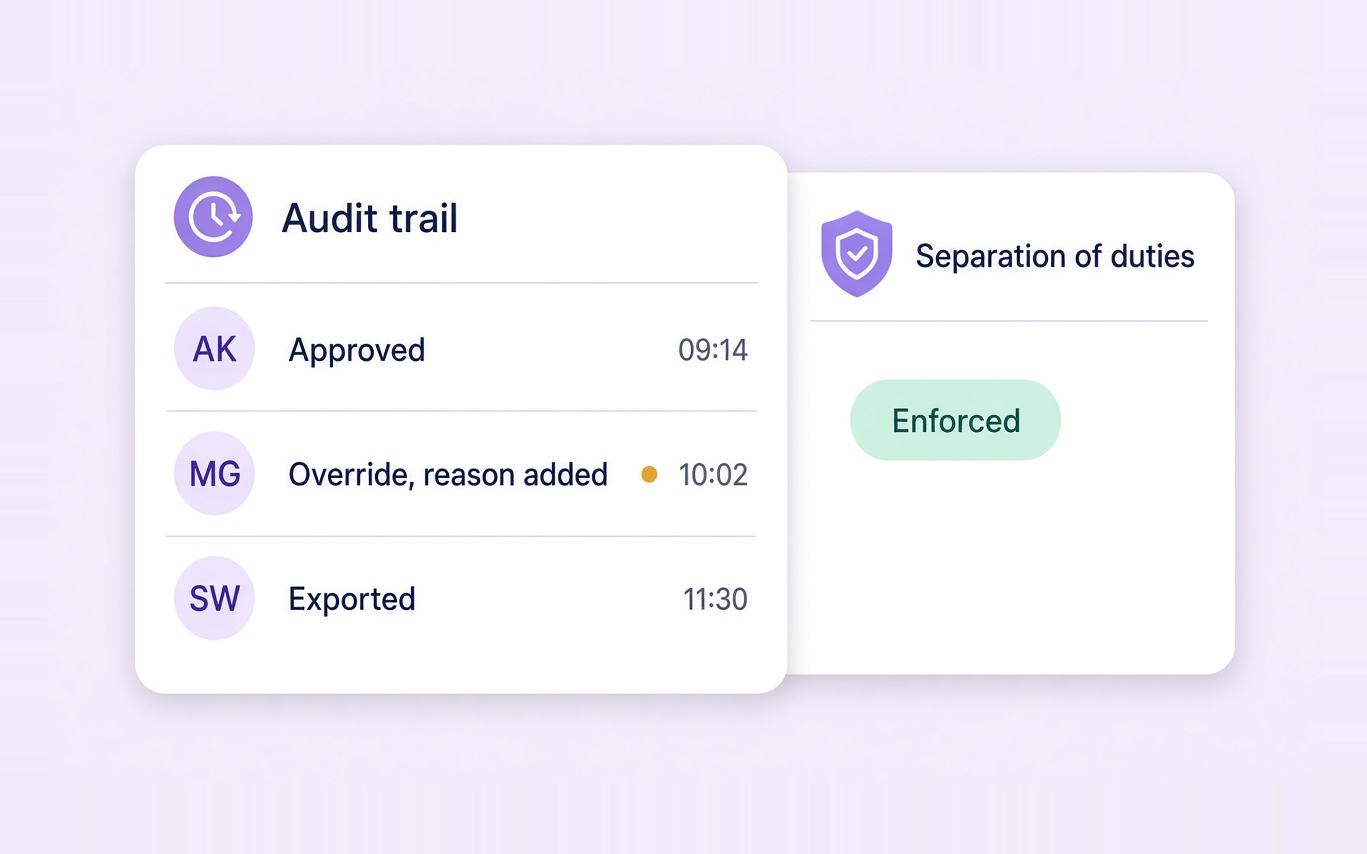
For controllers
Separation of duties enforced by the system, overrides always logged, and audit evidence produced by a filter rather than a fortnight.
Read the page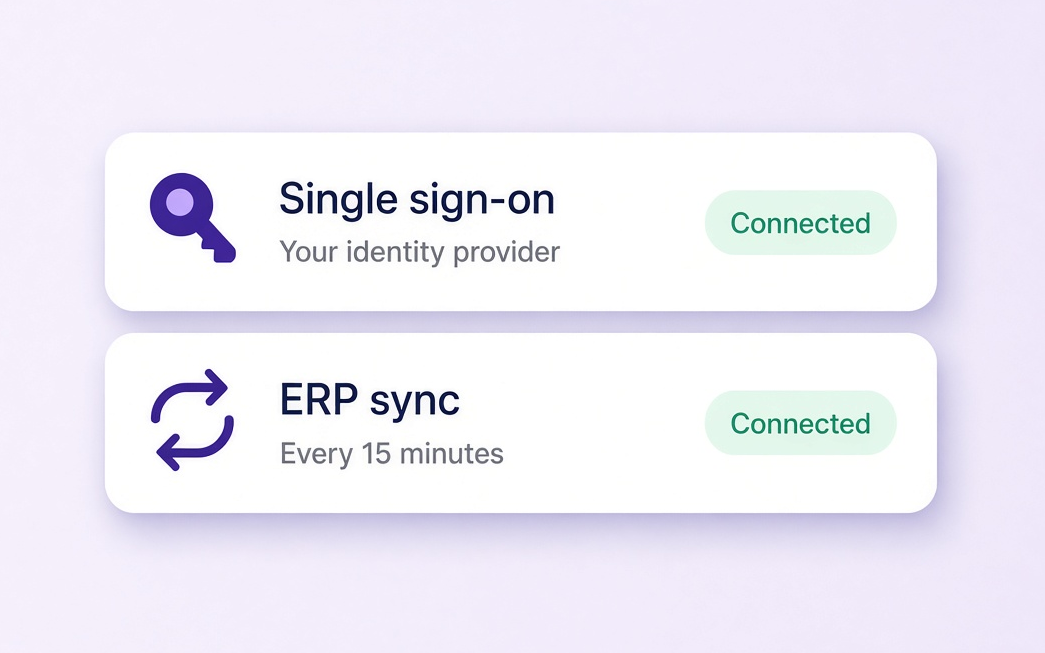
For IT teams
Nothing to host. Access is granted by department. SSO and ERP sync still need IT; the buying rollout does not.
Read the page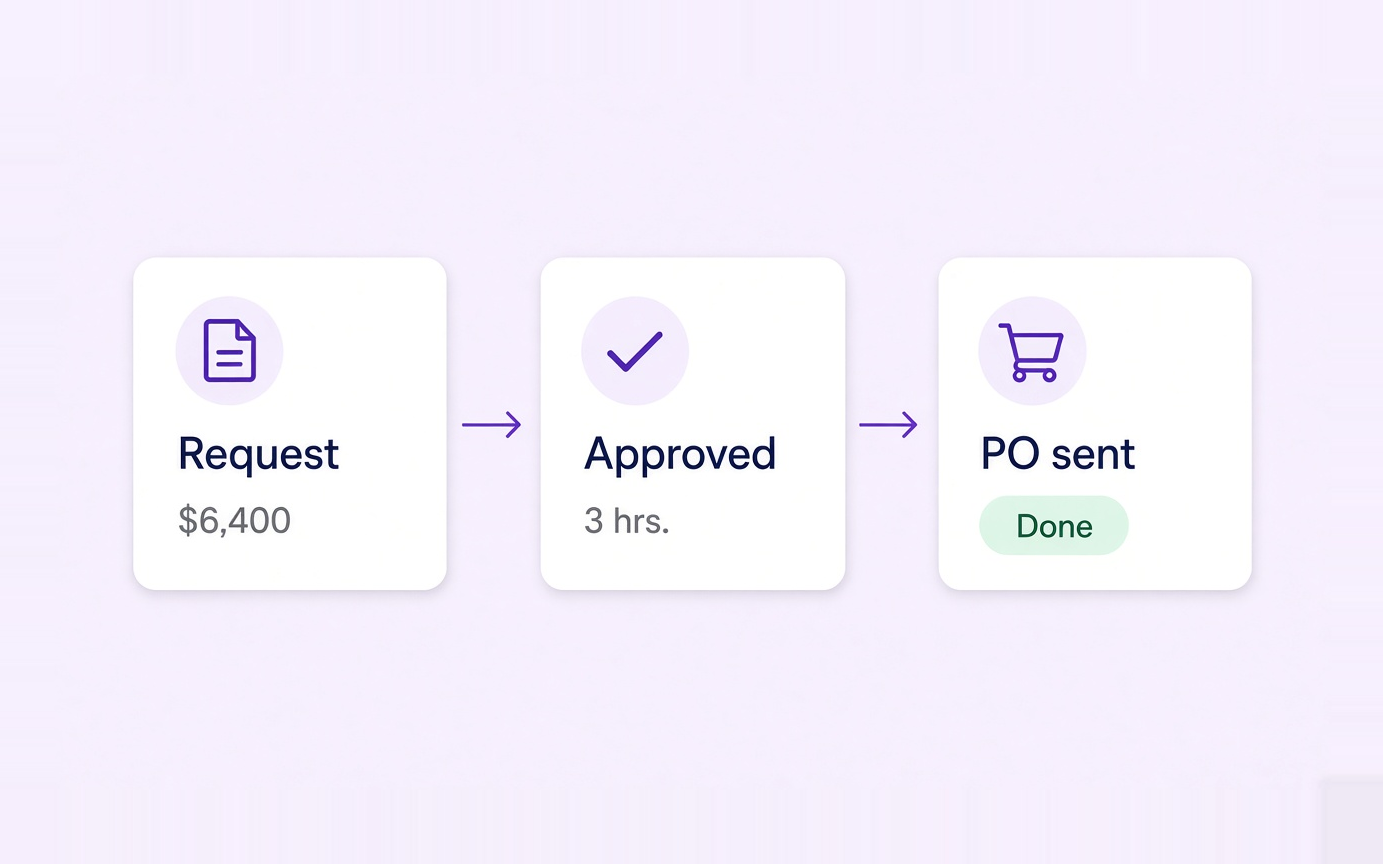
For mid market companies
Control without a suite implementation, for teams that have outgrown spreadsheets.
Read the pageQuestions people actually ask
Bring how you buy today
Thirty minutes. We will say which module to start with, or if it is not a fit.
Book your free demoOr see the product first: The platform